At St Matthias, we are committed to developing confident, fluent readers who are able to critically analyse texts and garner information from a range of sources and have a thirst for reading a wide variety of texts. All pupils will be able to read with accuracy, speed, confidence, fluency and understanding and will flourish as readers via a rigorous and systematic programme led by well trained, expert teachers in language rich environments. Our curriculum allows pupils to see themselves in the stories curated and plans for regular opportunities to expand their vocabulary. We aim to ensure the pupils identify themselves as readers by nurturing their love for reading so as to develop a life-long enjoyment of reading and books.
We are so proud of the love of reading that has been instilled in the children at St Matthias and we want to continue to develop this, whilst ensuring they feel confident when decoding and reading. We are therefore exceptionally proud of our reading curriculum, as we know that it is a strong foundation to build key reading skills.
Early Reading: Nursery & Reception
Nursery
Children develop an awareness of sounds, listening skills, and a love of stories. Daily story sessions, rhymes, songs, and interactive activities lay the foundations for reading, vocabulary, and oral language. Children explore sounds in their environment and learn stories, poetry and songs with rhythm, rhyme, and alliteration.
Reception
Children begin systematic synthetic phonics using Read Write Inc. (RWI). They learn letter–sound correspondences, blend sounds to read words, and practise common exception words. Daily read-aloud sessions build comprehension, vocabulary, and narrative knowledge.
Click the link below to watch Sylvie pronouncing the set 1 and 2 sounds:
Key Stage 1: Years 1–2
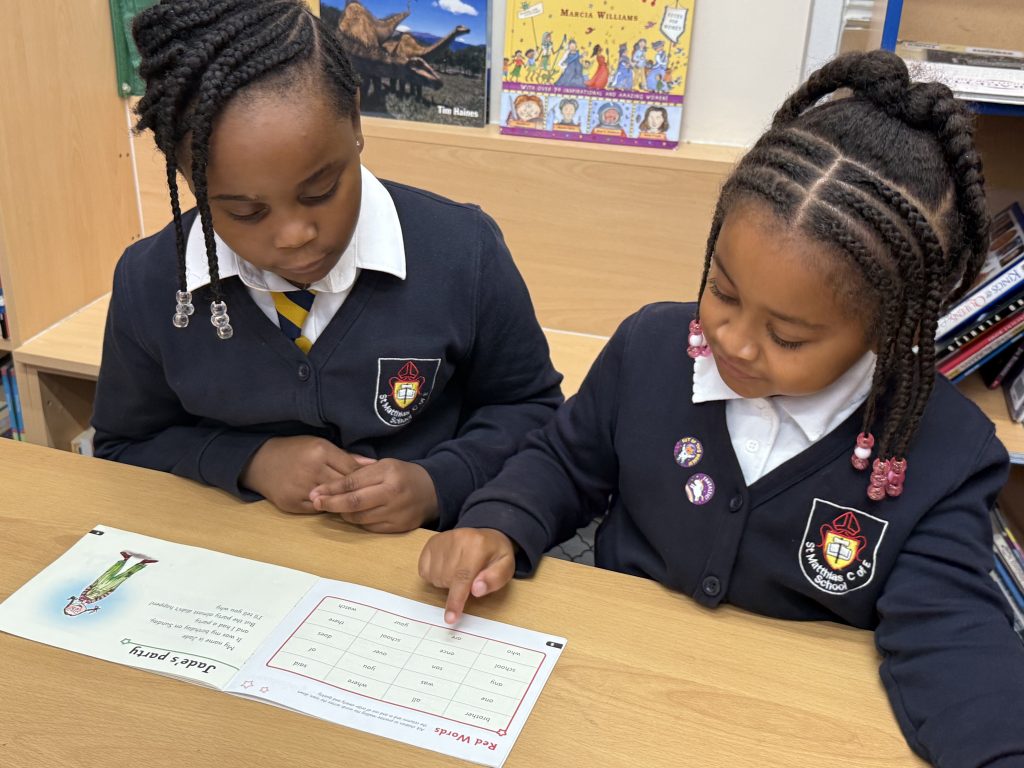
Children consolidate phonics knowledge using decodable texts matched to their knowledge of sounds. Lessons focus on developing sound knowledge, reading words with these sounds and reading texts with increasing fluency.
Pupils below age-related expectations are identified early and supported with targeted interventions, including daily phonics interventions.
Whole-Class Reading: Years 2–6
From Year 2, once children have a secure knowledge of sounds and can read texts fluently, they participate in whole-class reading lessons using fiction, non-fiction, and poetry texts. Lessons follow the approach outlined in Christopher Such’s Primary Reading Simplified:
- Fluency Read – building accurate, expressive reading and confidence with texts
- Close Read – critical thinking through detailed exploration of language, themes vocabulary, and understanding the intent of an author’s language choices
- Extended Read – developing reading stamina, a breadth of reading experiences and independent engagement with texts
Vocabulary and language are taught explicitly and systematically, ensuring children can access and understand the texts they read.
Core texts are carefully selected to provide breadth and challenge, including classic literature, contemporary stories, poetry, biographies, and non-fiction. This ensures children are exposed to rich language, diverse perspectives, and ideas beyond their own experiences, supporting both comprehension and cultural knowledge.
The St Matthias Reading Spine
Our Reading Spine ensures every child hears and engages with high-quality literature beyond their independent level. Classes explore:
- Classic and contemporary fiction
- Poetry and picture books
- Biographies and autobiographies of diverse, inspiring figures
Texts are selected to provide mirrors and windows into the world, develop language, comprehension and foster a love of reading.
Click here to see our St Matthias – Reading Curriculum Overview
Supporting All Readers
We use rigorous assessment to identify pupils who need extra support, including:
- Daily phonics for KS2 pupils new to English
- Targeted interventions for children reading below age expectations
- Embedding reading across the curriculum to strengthen vocabulary and knowledge
This ensures that all children make progress.