
Building Resilience
A fundamental element of online safety is supporting children to develop resilience. Rather than preventing children from using technology because it is deemed unsafe, it is far better to teach children to manage these risks safely. This can be likened to children around a swimming pool; it is far better to teach children to swim so they are safe around water, rather than cordon off the swimming pool. Children need to be able to navigate and make decisions so they are able to self-regulate independently when they leave primary school.
Our Online Safety Curriculum
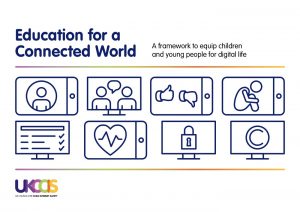
At St. Matthias, our computing curriculum is underpinned by Education for a Connected World, a framework to equip children and young people for digital life.
Education for a Connected World
The teaching content for each year group is split into eight key aspects of online education:
- Self-image and identity
- Online relationships
- Online reputation
- Online bullying
- Managing online information
- Health, wellbeing and lifestyle
- Privacy and security
- Copyright and ownership
Social Media and Wellbeing
In addition to the above, it is important to understand the impact that technology, in particular the use of social media, has on wellbeing. It provides opportunities for people to stay connected; share accomplishments; explore shared interests and express opinions; however, there is also the possibility that people are exposed to inappropriate content; manipulated images and privacy concerns.
We teach pupils about the many advantages of technology but we also teach them about the impact it can have on wellbeing, in both our computing lessons and our PSHE lessons. In particular, the fact that we need to limit screen time, in order to prevent overuse, which would impact on things such as sleep.
What you can do
The best way to protect your children online is to be informed yourself and make it part of your day to day life. Training children to be safe online is just as important as other safety messages such as crossing the road safely. After all, they can be out in the ‘world wide web’ from a very young age, unsupervised at times.
Use the websites below to help you find the best ways to talk to your children about keeping safe online:
- Child Exploitation and Online Protection (CEOP) Centre
- GoCompare Online Safety & Broadband controls
- Childnet
- CEOP ThinkUKnow
- Digital Parenting Magazine from Vodafone
- Safer Internet Centre
- o2 online safety resources
Please also visit here for some parental guides to apps. Please speak to a member of staff if you need any further support or have any questions about staying safe online.
Pre-recorded NSPCC online safety parent and carer workshop
Please click here to watch the workshop.
This NSPCC video explores the opportunities and the risks that online communication carries. It is a great video for tips and resources that can be used if ever you think a child is concerned about something they experience online.
Please note that this video is for all children, up to 18 years old, so not everything will apply to things that your child experiences or will experience. However, it is important to understand all potential risks and resources to support.
We teach all pupils at St Matthias how to navigate the online world safely and you can find what we teach them here: